Translational methods
The rat swam. Now it's your turn to walk.
A practical guide to the virtual water maze, from arena design to the measures reviewers will ask about.
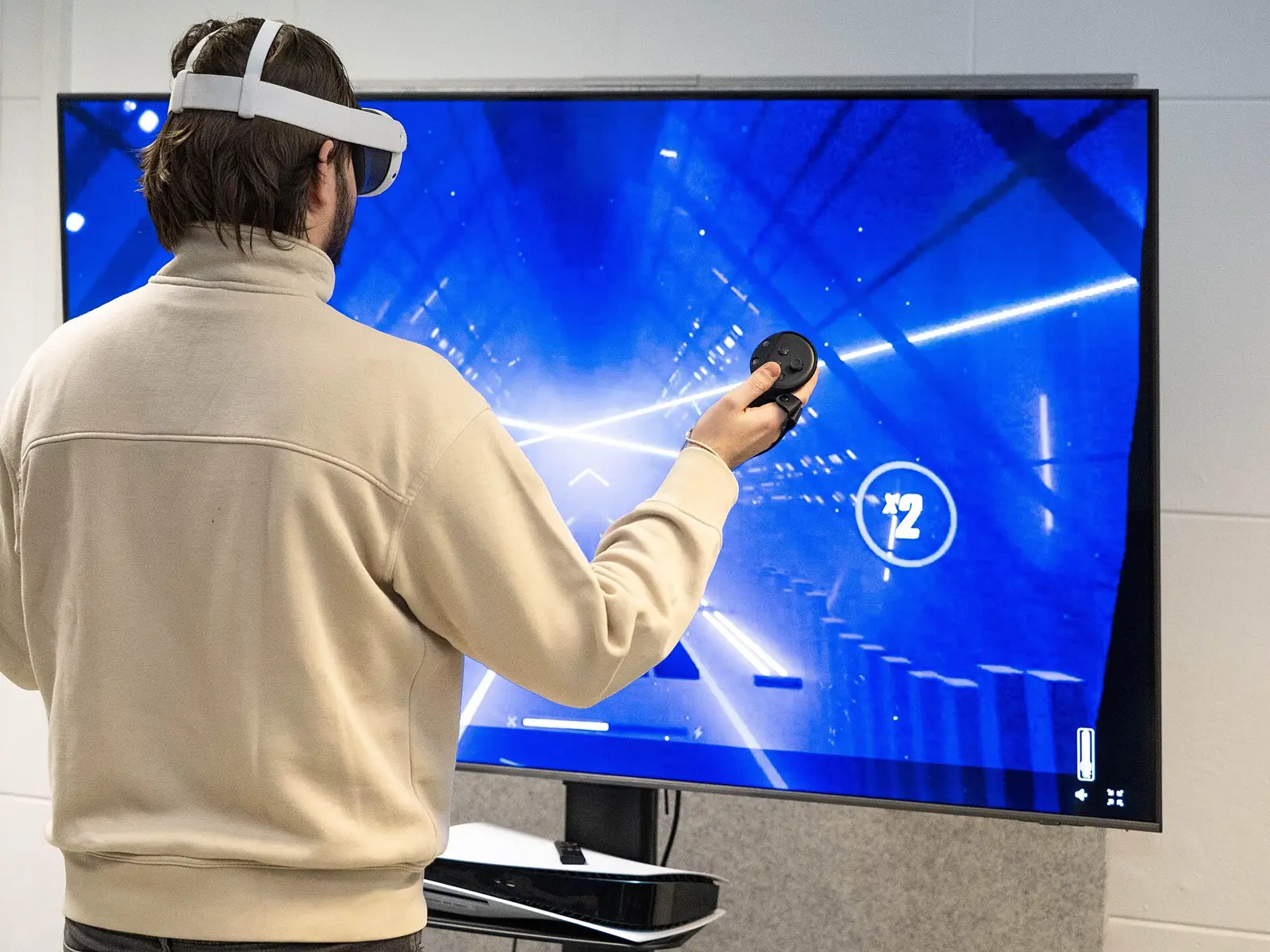
The water maze earned its reputation in rodents. Bringing it to people sounds simple until you start asking the awkward questions. Does a joystick count as navigation? What replaces the cold water as motivation? Which measures still mean the same thing?
This guide works through those questions one at a time: how the virtual arena is built, what changes between species, which measures travel well, and how to plan a study you'll be happy to defend.
Explore
On this site
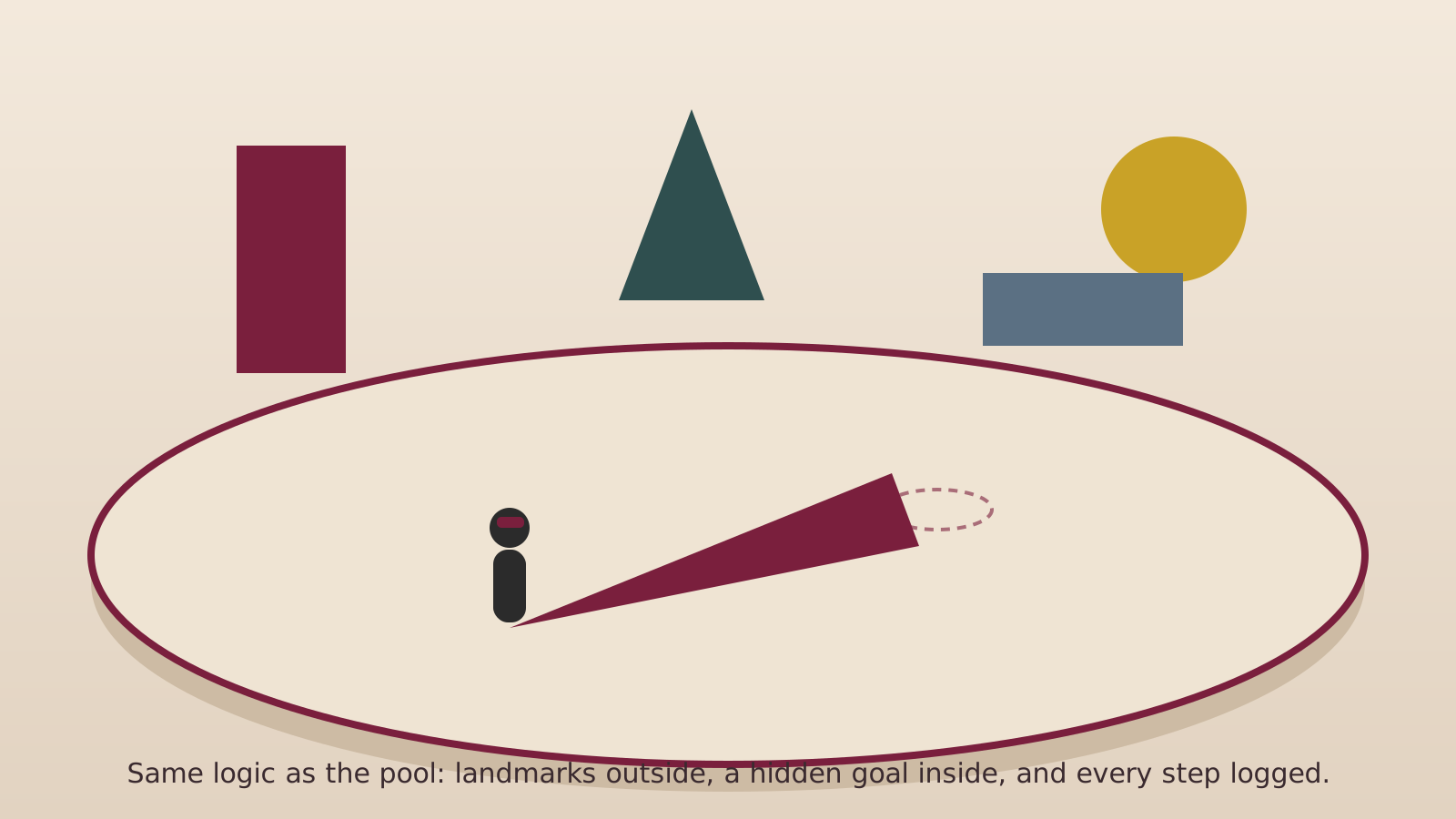
How the virtual water maze works
How a virtual Morris water maze rebuilds the pool, the cues and the hidden goal for human participants, step by step.
From the rodent pool to the human lab
Why the virtual Morris water maze matters for translational research, and what really changes between rats and people.
Measures that travel well
The analysis measures that work best for the virtual Morris water maze, and what each one actually tells you.
Planning a virtual water maze study
A planning checklist for a virtual Morris water maze experiment: participants, comfort, cues, trials, analysis and reporting.
Watch
HVS Image HVS 6D VR Morris water maze - Hidden platform - Idealised environment - Series of 4 trials
Four hidden-goal trials in a virtual arena, filmed from the participant's point of view.
Video from the HVS Image channel on YouTube. It's loaded in privacy-enhanced mode and only plays when you press play.
From the journals
Notes from the translational bench
A new HVS Image-tracked stroke study, an HVS virtual water maze in children with NF1, and rodent work a virtual maze could carry over. Each links to its source.
Stroke mice, nose drops, and an HVS Image tracker in the pool
A Henry Ford Hospital team asked whether the tiny vesicles shed by blood vessel cells and neural stem cells after a stroke help the two cell types rebuild together. In the dish, vesicles from one cell type pushed the other to grow, and the effect followed a handful of microRNAs that could be loaded into fresh vesicles on demand. Then came the animals: mice with a blocked middle cerebral artery received vesicle nose drops every other day for two weeks. Sensorimotor scores improved from day three, and in the water maze, run over the last five days and recorded and analysed with the HVS Image 2020 Plus Tracking System, treated mice found the hidden platform faster and spent more time in the right quadrant (eight per group). A neat translational question for human navigation work, and a reminder to read the methods: the abstract says rats, the behaviour section says mice.
Journal of Extracellular Biology
Read the original at Journal of Extracellular BiologyChildren with NF1 in an HVS virtual water maze
An exploratory Vanderbilt study put children with neurofibromatosis type 1 and reading difficulty into a virtual reality water maze built as a human analogue of the Morris task. The software was the HVS Water Maze (Version 2017.7, HVS Image Software), run on a PC with an Oculus Rift headset: six learning trials and a probe, with path length, latency and Gallagher cumulative search error recorded at a fixed swim speed. Typically developing children matched on reading skill (n = 14) generally outperformed the NF1 group (n = 17) on the learning trials, even after IQ and working memory were taken into account, yet the probe trial showed no clear group difference. Early navigation looked harder for NF1; with practice the gap narrowed. Open abstract on PubMed (PMID 40874180).
Journal of Pediatric Neuropsychology
Read the original at Journal of Pediatric NeuropsychologyHippocampal navigation can run on habit
Rats (20 males, 22 females) learned a maze where the same left or right turn led to milk or to water, depending on where the choice was made. After a day without water, only rats that re-experienced the maze while thirsty switched towards the water-linked turns; rats that merely tasted both drinks while thirsty kept heading for milk, even when the task needed the hippocampus. Not a water maze study in the swimming sense, but a sharp point for anyone who reads every direct path as goal-directed thinking.
Read the original at The Journal of NeuroscienceA nasal treatment helped ageing males, not females
SAMP8 mice, a fast-ageing strain, received the Euphorbia-derived diterpene ER272 by nose for eight weeks from four months of age. Both sexes were impaired in the water maze and in object discrimination, but only treated males recovered, spending more time in the target quadrant at probe. Open-field testing ruled out changes in general movement. The case for testing both sexes, in one paper. Published in Aging Cell.
Aging Cell
Read the original at Bioengineer.org